Andong, in Gyeongsangbuk-do, is known for UNESCO-listed Hahoe Village and Confucian academies, and for mask dance. This guide covers ten places, how to reach the city by train, and how to move between sights that are spread across a wide area.
The selection is based on what the Korea Tourism Organization (KTO) and the Andong city tourism site feature, plus places with an official designation such as UNESCO World Heritage. It is not a ranking, and the order follows geography, not popularity.
Getting there and around
KTO says Andong is reached by train or intercity bus from Seoul, Busan, Daegu and other cities. Its Andong guide (last updated May 2026) gives these train routes to Andong Station:
- From Seoul: KTX-Eum from Seoul Station, Cheongnyangni Station or Sangbong Station, about 1 hr 50 min.
- From Busan: KTX-Eum from Bujeon, Sinhaeundae, Centum or Gijang, about 1 hr 40 min.
- From Daegu: a Mugunghwa train or intercity bus from Dongdaegu Station, about 1 hr 20 min.
The city’s tourism site shows KTX-Eum timetables on its by-train page; check Korail for current times on your date. Booking with a foreign card is covered in KTX Booking with a Foreign Card, and buses in Intercity Express Buses.
Sights are far apart. KTO says a day trip suits Hahoe Village, Byeongsanseowon and Woryeonggyo Bridge, and an overnight stay suits adding Dosanseowon, Bongjeongsa and Manhyujeong Pavilion. Local options:
- City buses. KTO’s table lists buses for each sight (given below). The Andong tourism site shows different numbers for some of the same places, so check the Andong bus information system (Korean only, linked from KTO) before you go.
- Tourist taxi. KTO lists 125,000 won for a 4-seater and 300,000 won for an 11-seater, based on up to five hours within a 10-km radius of Andong Station. It says a 2026 discount may end early if funding runs out. Taxi site: andongtourtaxi.com.
- Apps and cards. See Naver Map for Visitors, Taxis Without a Korean Number and T-money with a Foreign Card.
- Free guides. KTO says free commentary in English, Japanese and Chinese is available at major sights such as Hahoe Village and Dosanseowon, bookable through a Cultural Tourism Interpreter Guide service.
Major sights
Hours below are from the Andong city tourism site’s “viewing hours” page, which splits the year into a summer and a winter schedule. From November the winter schedule applies. The same page says hours vary by sight and tells visitors to check each official site.
Hahoe Village (하회마을)
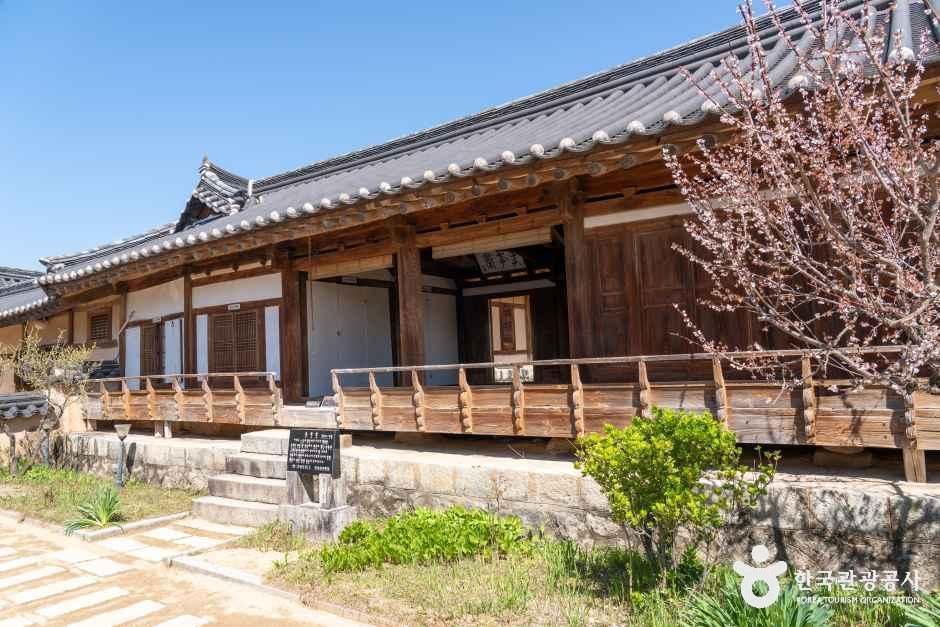
A clan village inside a bend of the Nakdonggang River. It is part of “Historic Villages of Korea: Hahoe and Yangdong”, which UNESCO inscribed in 2010. UNESCO describes the two as the most representative historic clan villages in Korea, founded in the 14th and 15th centuries. KTO says descendants of the Ryu clan of Pungsan still make up most of the villagers.
- Getting there: KTO’s Andong guide lists city buses Express 2, 210, Pungcheon 2 and a Hahoe shuttle bus. The Andong tourism site lists line 246.
- Hours, closed days, admission: Per Visit Andong, 09:00 to 18:00 from February to October and 09:00 to 17:00 from November to January, open all year. KTO gives a different season split (April to September, then October to March), so confirm the day’s hours. Adults 5,000 won, teenagers 2,500 won, children 1,500 won, per both KTO and Visit Andong, checked 2 Nov 2026.
- Official page · Map
Hahoe Mask Museum (하회세계탈박물관)
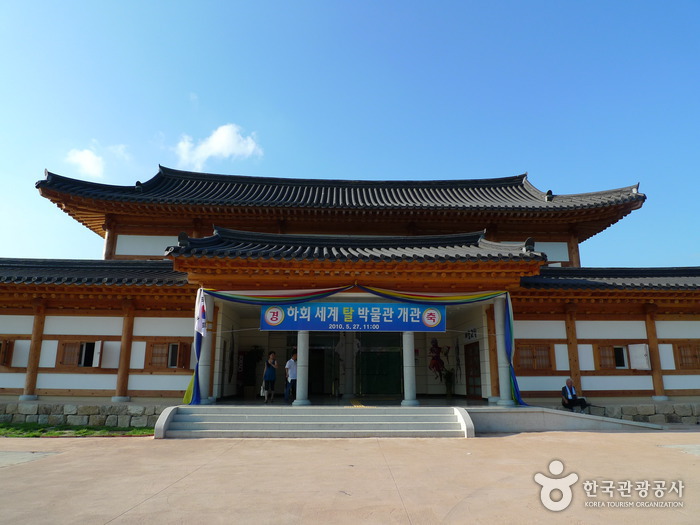
A museum inside Hahoe Village for Hahoe masks (a National Treasure, per KTO) and masks from other countries. KTO says it has five permanent halls and one special hall, plus activities such as trying on masks.
- Getting there: Inside Hahoe Village, per KTO.
- Hours, closed days, admission: Per KTO, 09:30 to 18:00. Closed on 1 January, Seollal day and Chuseok day. The museum is free; the village ticket is separate (KTO, checked 2 Nov 2026).
- Official page · Map
Buyongdae Cliff (부용대)
A cliff of about 64 metres across the river from Hahoe Village. KTO says the top gives a view over the village, which is laid out like a lotus. The traditional fireworks show Hahoe Seonyu Julbul Nori is staged against this cliff (see practical notes).
- Getting there: Check the official page for transport.
- Hours, closed days, admission: KTO lists it as open year-round. Check the official page for admission.
- Official page · Map
Byeongsanseowon Confucian Academy (병산서원)

A Joseon-era private academy, moved to this site in 1572 by the scholar Ryu Seongryong, per KTO. It is one of nine academies in UNESCO’s “Seowon, Korean Neo-Confucian Academies”, inscribed in 2019. KTO says it sits with the river in front and a mountain behind.
- Getting there: KTO lists bus 210. The Andong tourism site’s line 246 table also has a Byeongsanseowon stop.
- Hours, closed days, admission: Per Visit Andong, 09:00 to 18:00 (summer) and 09:00 to 17:00 (winter); admission free; open all year (checked 2 Nov 2026).
- Official page · Map
Imcheonggak House (임청각)
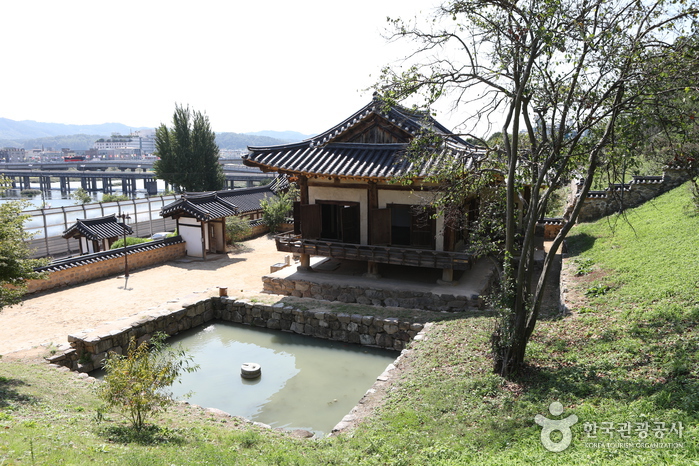
KTO calls it the largest remaining household from the Joseon dynasty, with over 500 years of history. It was built with 99 kan, of which 70 remain, and its best-known building is the pavilion Gunjajeong. KTO says old-house experiences are offered and tells visitors to check schedules and prices in advance.
- Getting there: Check the official page for transport.
- Hours, closed days, admission: Check the official page for hours and admission.
- Official page · Map
Woryeonggyo Bridge (월영교)
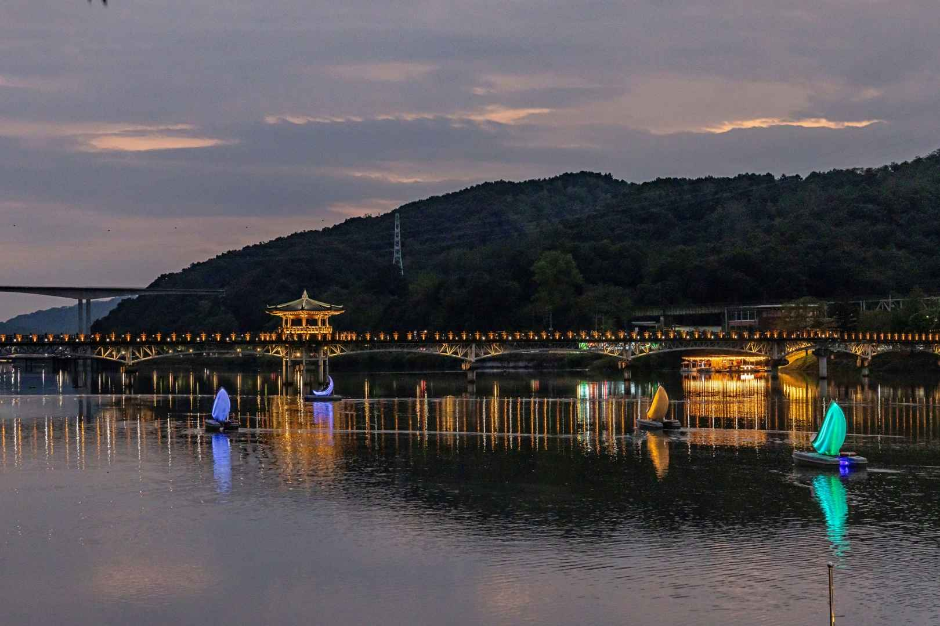
A wooden footbridge built in the shape of a traditional hemp shoe, linked to a local legend. KTO describes it as Korea’s longest wooden pedestrian bridge and says it is lit after dark.
- Getting there: KTO’s Andong guide lists city bus 112.
- Hours, closed days, admission: Per KTO, open 24 hours all year; Visit Andong lists admission as free (checked 2 Nov 2026).
- Official page · Map
Andong Old Market and Jjimdak Alley (안동시장 찜닭골목)
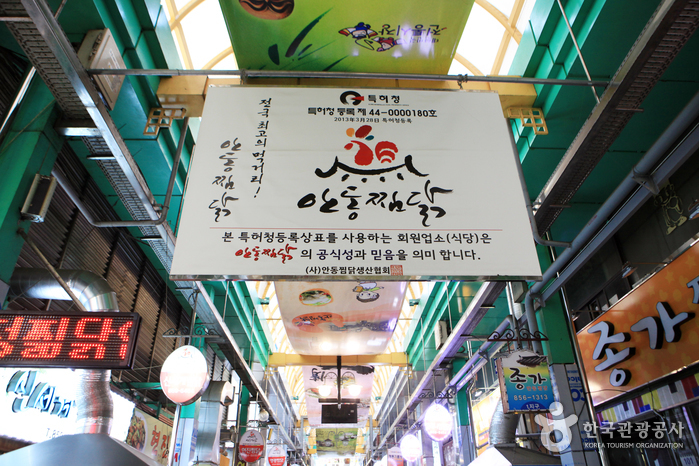
KTO’s record says the alley began as a chicken street in Andong Old Market and gave its name to Andong jjimdak, braised chicken with glass noodles and vegetables. KTO’s Andong guide says jjimdak is usually cooked as a whole chicken for two or three people, while many restaurants serve salted mackerel set meals for one. See eating in Korea with dietary needs.
- Getting there: A KTO market page (published 2023) says about 20 minutes by bus from Andong Station or the bus terminal.
- Hours, closed days, admission: That page lists market hours of 09:00 to 22:00, with closed days varying by shop (checked 2 Nov 2026).
- Official page · Map
Andong Soju and Traditional Food Museum (안동소주·전통음식 박물관)
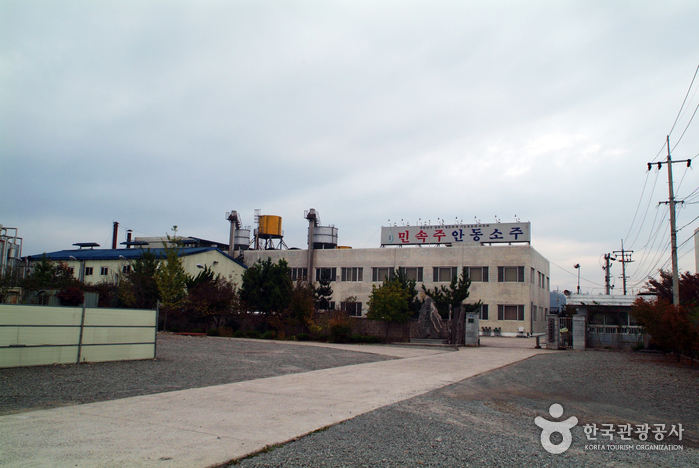
Opened in 1995 to document Andong soju, a regional spirit listed as Gyeongsangbuk-do intangible heritage, per KTO. KTO describes it as distilled from wheat at 45 percent ABV.
- Getting there: Check the official page for transport.
- Hours, closed days, admission: KTO lists 09:00 to 17:00, open all year, free. Visit Andong lists 10:00 to 17:00, so confirm before you go (checked 2 Nov 2026).
- Official page · Map
Dosanseowon Confucian Academy (도산서원)

The academy tied to the scholar Yi Hwang (pen name Toegye). The Dosanseodang hall, built in 1561, is the oldest building on the site, per Visit Andong. It is one of the nine academies in UNESCO’s 2019 Seowon listing. It lies north-east of the city, so allow separate travel time.
- Getting there: KTO’s Andong guide lists city buses Express 3 and 512.
- Hours, closed days, admission: Per Visit Andong, 09:00 to 18:00 from February to October and 09:00 to 17:00 from November to January; open all year. Adult individual ticket 2,000 won, youths 1,000 won (checked 2 Nov 2026). Parking is charged.
- Official page · Map
Bongjeongsa Temple (봉정사)
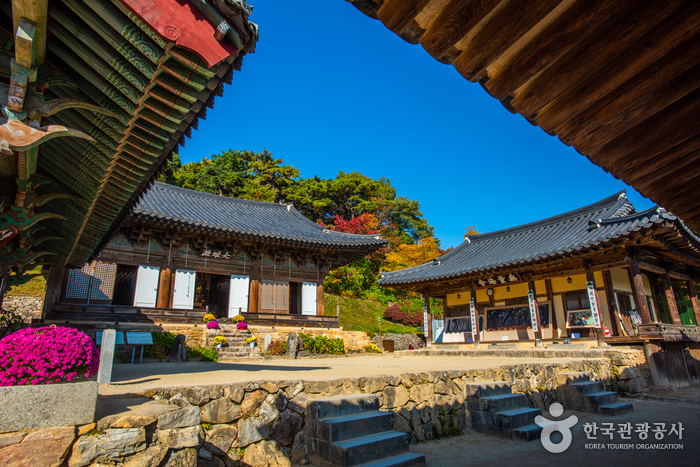
A temple that UNESCO lists among the seven “Sansa, Buddhist Mountain Monasteries in Korea”, inscribed in 2018. KTO says Geungnakjeon Hall is considered Korea’s oldest surviving wooden building. Temple etiquette is covered in Visiting a Korean Temple.
- Getting there: KTO lists city buses Express 2 and 310; the Andong tourism site lists route 351.
- Hours, closed days, admission: Per Visit Andong, 07:00 to 19:00 in summer and 08:00 to 17:00 in winter, open all year. Sources conflict on fees: KTO lists adults 2,000 won, while Visit Andong’s fee table says free. Confirm at the gate (checked 2 Nov 2026).
- Official page · Map
Practical notes
- Mask dance. KTO says the Hahoe mask dance drama, Hahoe Byeolsingut Tallori, is staged at the Hahoe Village mask dance theatre, Tuesday to Sunday at 14:00, closed Mondays. Visit Andong’s table shows weekends only in January and February, so check the month you visit. The Andong Maskdance Festival ran 24 Sep to 4 Oct in the KTO guide (updated May 2026); that date has passed, so look up the next edition’s dates.
- Fireworks. Hahoe Seonyu Julbul Nori takes place about ten times a year on selected Saturdays in May and August to October, per KTO. It recommends booking online one month ahead; same-day tickets go on sale from 13:00 at the Hahoe ticket office, limited to 300. KTO’s 2026 dates ended on 31 Oct, so none remain this year.
- Holidays. The Hahoe Mask Museum closes on Seollal and Chuseok day, and Visit Andong lists other museums closed then. See Seollal and Chuseok: closures and transport and Korean Public Holidays 2026-2027.
- Weather. Winter hours are shorter, as above. See Korea Weather by Season.
- Help. The KTO helpline is +82-2-1330 (Korean, English, Japanese, Chinese, Russian, Vietnamese, Thai, Indonesian).
Related guides
- Gyeongju Travel Guide: Major Sights and Access
- Jeonju Travel Guide: Major Sights and Access
- KTX Booking with a Foreign Card
Sources
- UNESCO World Heritage Centre — Historic Villages of Korea: Hahoe and Yangdong, checked 2 Nov 2026
- UNESCO World Heritage Centre — Seowon, Korean Neo-Confucian Academies, checked 2 Nov 2026
- UNESCO World Heritage Centre — Sansa, Buddhist Mountain Monasteries in Korea, checked 2 Nov 2026
- Korea Tourism Organization — Andong Travel Guide, checked 2 Nov 2026
- Korea Tourism Organization — Andong Hahoe Village, checked 2 Nov 2026
- Korea Tourism Organization — Hahoe Mask Museum, checked 2 Nov 2026
- Korea Tourism Organization — Buyongdae Cliff, checked 2 Nov 2026
- Korea Tourism Organization — Woryeonggyo Bridge, checked 2 Nov 2026
- Korea Tourism Organization — Imcheonggak House, checked 2 Nov 2026
- Korea Tourism Organization — Andong Old Market Union, checked 2 Nov 2026
- Korea Tourism Organization — Andong Soju and Traditional Food Museum, checked 2 Nov 2026
- Korea Tourism Organization — Bongjeongsa Temple, checked 2 Nov 2026
- Andong City Tourism (Visit Andong) — Viewing Hours, checked 2 Nov 2026
- Andong City Tourism (Visit Andong) — Admission Fee, checked 2 Nov 2026
- Andong City Tourism (Visit Andong) — Hahoe Village, checked 2 Nov 2026
- Andong City Tourism (Visit Andong) — Dosan Seowon, checked 2 Nov 2026
- Andong City Tourism (Visit Andong) — Getting to Andong by Train, checked 2 Nov 2026
- Korea Tourism Organization place records (overview and coordinates), checked 2 Nov 2026