Per the official tourism pages, Incheon is known for its 1883 open-port district, a Chinatown, island and beach areas, and the UNESCO-listed dolmens of Ganghwa. This guide covers ten places in a route from the old port district out to Songdo, Yeongjong and Ganghwa, with access notes.
Selection is based on places that Incheon’s official English tourism site and the Korea Tourism Organization (KTO) feature, plus one UNESCO World Heritage site. They are ordered by area, not by popularity.
Getting there and around
Old port district. Incheon’s tourism site says to ride Seoul Subway Line 1 towards Incheon and get off at the last stop, Incheon Station. It adds that an express train ends one stop earlier, at Dong-Incheon, so a stopping train is the safer choice (per Incheon tourism, itour, checked 2 Nov 2026). Chinatown, the Open Port Museum and the Fairy Tale Village are all within walking distance of Incheon Station. See How to Ride the Seoul Subway and T-money with a Foreign Card.
Wolmido. An Incheon tourism page names city bus 45 as a route that stops at the Fairy Tale Village, Incheon Station (Chinatown), Wolmi Theme Park and Wolmi Culture Street, and the Wolmido bus terminal. From Wolmido Quay, ferries run to Yeongjongdo island; the page says timetables differ on weekdays, weekends and holidays, so check ahead.
Songdo and Yeongjong. The official pages used here do not give transit routes for Songdo Central Park or Eurwangni Beach. Use a map app (Naver Map, apps for Korea) or a taxi (Taxis Without a Korean Number).
From the airport. Incheon Airport to Seoul covers the airport trains and buses. If you have a long layover, the Incheon Airport transit tour page says you can join if your layover is 24 hours or less. You need your passport and both boarding passes, and you must reach the registration desk at least 30 minutes before the start. That page does not list the tour courses or cost, so check the Course Information section for current routes. It also warns that visitors from visa-free countries may still need a K-ETA.
Ganghwa. Ganghwa is an island west of the city, connected to the mainland by bridges. Ganghwa County’s English transport page lists express city buses such as No. 3000 (Ganghwa to Sincheon, as spelled on the page) and No. 800 (Ganghwa to Incheon Bus Terminal). The page carries only a 2016 copyright date, so treat times and fares as unconfirmed. For intercity coaches generally, see Intercity Express Buses.
For general tourism questions, Incheon’s pages give the KTO helpline 1330.
Major sights
Incheon Chinatown (인천 차이나타운 Incheon Chaina-taun)
Chinatown grew after Incheon Port opened in 1883, when the area became a Chinese settlement, according to the KTO record. Today most businesses there are restaurants. Incheon’s walking guide takes you through three traditional gates, past the Korean-Chinese Cultural Center and two mural streets, and points out the area’s jajangmyeon (짜장면, black bean noodles) culture.
- Getting there: Ride Subway Line 1 to Incheon Station, the last stop; a large Chinatown gate stands across the street (per Incheon tourism).
- Hours, closed days, admission: The streets are free to enter (per Incheon tourism, checked 2 Nov 2026). The Jajangmyeon Museum charges ₩1,000 (same source). The walking-guide page gives no hours.
- Official page · Map
Songwol-dong Fairy Tale Village (송월동 동화마을 Songwol-dong Donghwa-maeul)
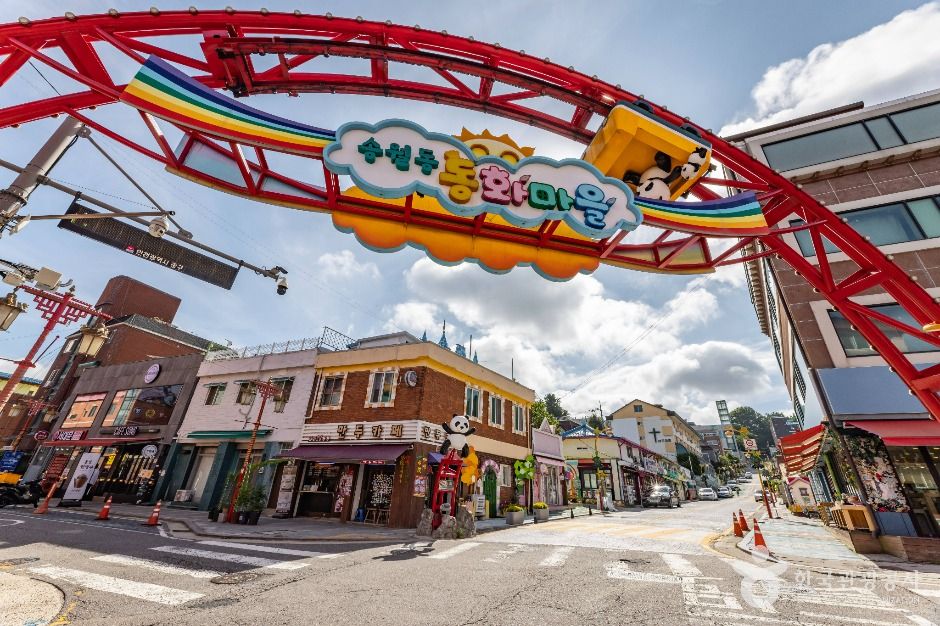
This neighbourhood was redone as a fairy-tale street project, with murals and sculptures. Incheon’s English page says the themed streets feature characters from 11 well-known fairy tales and suggests about an hour for the photo zones and a walk through the village. Jung-gu’s page also lists a two-floor Trick Art Story hall.
- Getting there: Jung-gu says to take Line 1 to Incheon Station and walk about 10 minutes.
- Hours, closed days, admission: Incheon tourism says it is open all year and free (per Incheon tourism, checked 2 Nov 2026). No opening hours are listed; Jung-gu’s page says to call 032-760-6480.
- Official page · Map
Incheon Open Port Museum (인천개항박물관 Incheon Gaehang Bangmulgwan)
The museum is in the former Incheon branch of Japan’s First Bank, a building with a central dome that is a designated city tangible cultural property. Its four permanent halls cover the period from the port’s opening in 1883 to 1910, including the Gyeongin Railway and a street model of the port area, according to Jung-gu.
- Getting there: Line 1 to Incheon Station, then about a 5-minute walk (per Jung-gu).
- Hours, closed days, admission: Tuesday to Sunday, 09:00 to 18:00, last entry 17:30; closed Mondays; adults ₩500 (per Incheon tourism, checked 2 Nov 2026). For commentary in a foreign language, the same page says to reserve through culture-tour.incheon.go.kr.
- Official page · Map
Incheon Jayu Park (자유공원 Jayu Gongwon)
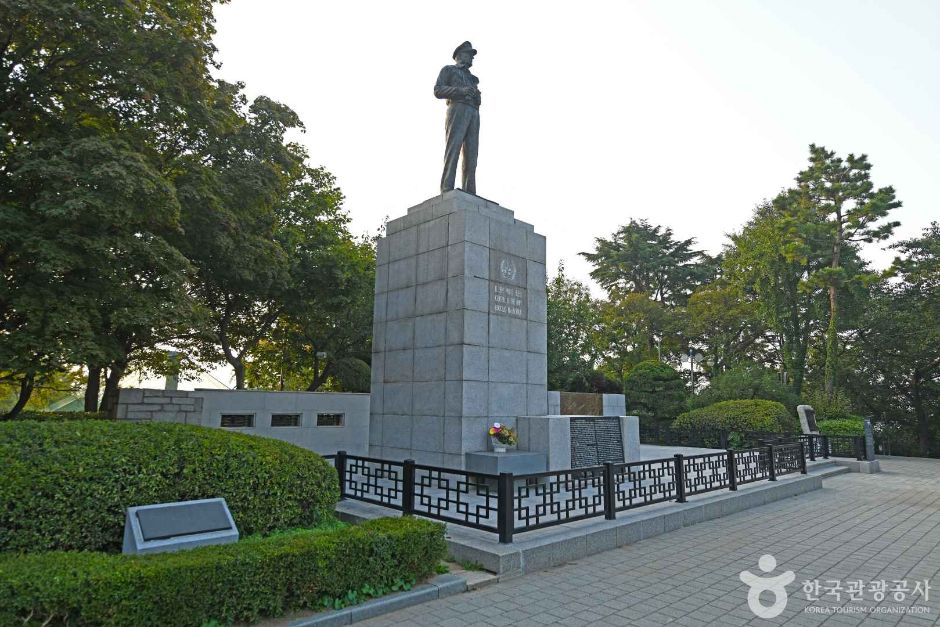
The KTO record calls Jayu Park the first Western-style park in Korea, built five years after Incheon Port opened. It sits on high ground with forest, a centennial monument for the Korea-US treaty of 1882 and a statue of General MacArthur. Cherry blossoms fill the park each April, per the KTO record. The park also overlooks the port-area sights above, and the Jemulpo Club (a heritage building) stands below its south stairs.
- Getting there: Incheon tourism lists it on its Open Port course from Incheon Station but gives no separate directions.
- Hours, closed days, admission: Check the official page for hours and admission.
- Official page (Open Port area course) · Map
Wolmido Island and Wolmi Park (월미도 Wolmido)
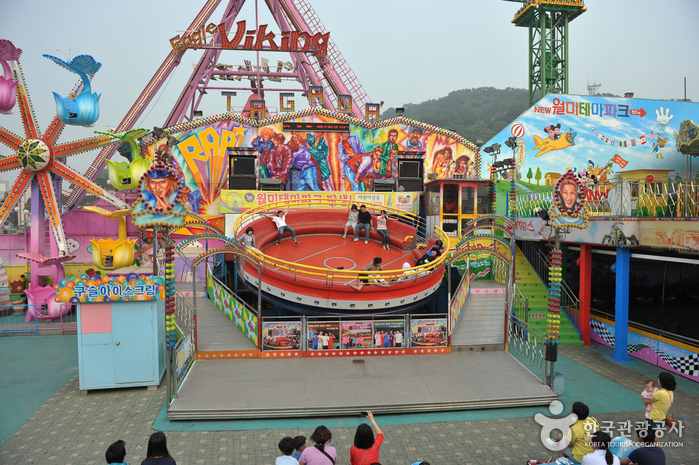
Wolmido is a seafront area that is no longer a true island, since it is joined to the mainland. Jung-gu’s page lists many things on it: Wolmi Theme Park, a cruise, Wolmi Culture Street, a lighthouse path along the breakwater, Wolmi Park with its observatory and traditional garden, the Museum of Korean Emigration History, and the Wolmi Sea Train, a monorail around the island. The KTO record says people come for coffee and seafood with sea views.
- Getting there: City bus 45 reaches the Wolmido bus terminal (per Incheon tourism).
- Hours, closed days, admission: Wolmi Theme Park single-ride tickets are ₩6,000 for adults and ₩5,000 for children; the ferry to Yeongjongdo is ₩3,500 for adults (per Incheon tourism, page updated June 2026, checked 2 Nov 2026). Jung-gu says cruise times depend on the operating schedule. Check the official page for other hours and fares.
- Official page · Map
Songdo Central Park (송도 센트럴파크 Songdo Sentreol Pakeu)
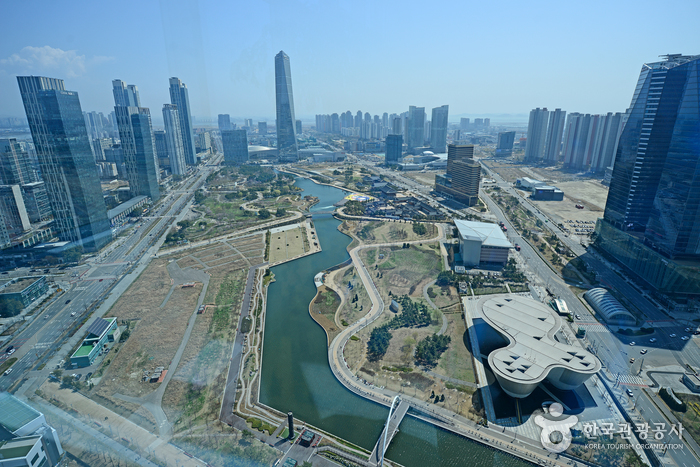
The KTO record describes Songdo as a man-made island and Songdo Central Park as the first seawater park in the country. Visitors can use water activities such as a water taxi and canoeing. Incheon tourism lists a water taxi from the West Boat House, plus kayaks and a Moon Boat from the East Boat House.
- Getting there: Official pages give the address, 160 Convensia-daero, Yeonsu-gu, but no transit directions.
- Hours, closed days, admission: Incheon tourism pages (last updated 2021) list the water taxi as 10:00 to 21:00 in summer and 10:00 to 18:00 in winter, open year-round, adults ₩4,000. These are older pages, so confirm current times and fares. The kayak and boat hours change with the season; call ahead.
- Official page · Map
Eurwangni Beach (을왕리해수욕장 Eurwangni Haesuyokjang)

The KTO record says Eurwangni Beach was designated a National Tourist Site in 1986. It is about 700 m long, a white-sand beach with a reputation for sunsets, and boats can be rented for fishing. Incheon’s English site covers the beach under the title Eurwangri Wangsan Beach, and says you can walk across tidal flats at low tide.
- Getting there: The Incheon page says to take the subway or a bus but lists no routes or stops. A ferry from Wolmido goes to Yeongjongdo, the island in Yeongjong-gu district.
- Hours, closed days, admission: Not listed. Check the official page for details or call the number it gives.
- Official page · Map
Ganghwa Dolmen Park and Bugeun-ri Dolmen (강화 고인돌 유적 Ganghwa Goindol Yujeok)
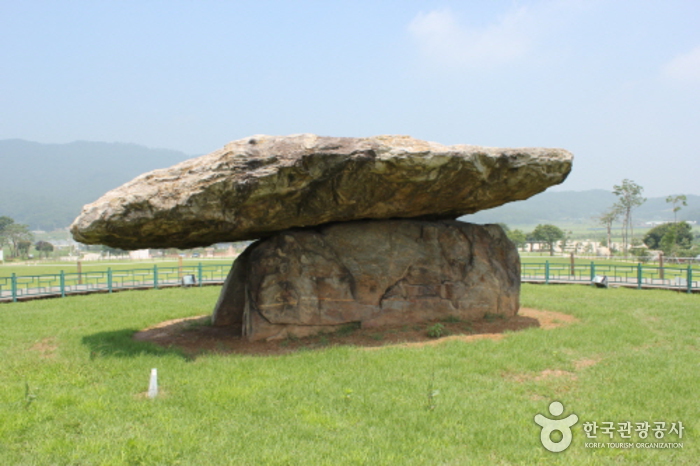
These Bronze Age stone tombs are part of the UNESCO World Heritage property Gochang, Hwasun and Ganghwa Dolmen Sites. UNESCO lists a Ganghwa component of 12.27 hectares and notes that the dolmens sit on mountain slopes. Incheon tourism says the Bugeun-ri dolmen has a capstone of roughly 6.5 m and that the dolmens became a World Heritage Site in 2000. The Ganghwa History Museum and Ganghwa Natural History Museum are next to the park.
- Getting there: Only the address (994-12 Ganghwa-daero, Hajeom-myeon) is given. See the Ganghwa bus note above.
- Hours, closed days, admission: The dolmen site is open 24 hours and free (per Incheon tourism, checked 2 Nov 2026). The History Museum is listed as daily 09:00 to 18:00, closed Mondays, adults ₩3,000, but that page dates from 2021. Ganghwa County’s tourist information centre at the Dolmen ticket office is listed as closed Wednesdays.
- Official page · Map
Jeondeungsa Temple (전등사 Jeondeungsa)
Incheon tourism says Jeondeungsa calls itself the oldest temple in Korea. It was first named Jinjongsa and renamed in the Goryeo period. The temple runs Temple Stay programs for Korean and foreign visitors; see Templestay in Korea.
- Getting there: Only the address (37-41 Jeondeungsa-ro, Gilsang-myeon) is given.
- Hours, closed days, admission: Summer 08:00 to 18:30, winter 08:30 to 18:00; adults ₩4,000, teenagers ₩3,000, children ₩1,500; ages 65 and over free (per Incheon tourism, page updated Nov 2025, checked 2 Nov 2026). Another Incheon page lists 00:00 to 24:00, so the two pages differ; check with the temple.
- Official page
Gyodongdo Island (교동도 Gyodongdo)

Gyodongdo lies northwest of Ganghwa Island and became easier to reach when the Gyodongdaegyo Bridge opened in July 2014, per the KTO record. It has Daeryong Market, an alley market with murals and statues, and the Manghyangdae memorial for refugees from Hwanghae. The island has a peace-and-reunion theme, with a cycling Peace Trail.
- Getting there: Official pages give addresses only. For this area, an Incheon tourism page (last updated Sept 2021) says to bring ID, fill out a visit form with the military police before crossing the civilian control line, and get a visitation card. Rules may have changed; confirm before going via Ganghwa County (+82-32-930-3114).
- Hours, closed days, admission: Check the official pages for hours and admission.
- Official page · Map
Practical notes
- Closed days. The Open Port Museum is closed Mondays. Ganghwa’s History Museum is listed as closed Mondays, New Year’s Day and Chuseok. Public holidays shift what is open: see Korean Public Holidays 2026-2027.
- Events. Incheon tourism says the Incheon-China Festival is held in June around the Korean-Chinese Cultural Center (page updated May 2024).
- Older pages. Several Incheon pages are dated 2016 to 2021, and they say details may have changed. Treat fares and times on those pages as a starting point.
- Weather. Coastal and island sights are open-air. See Korea Weather by Season.
Related guides
- Seoul Travel Guide: Major Sights and Access
- Suwon and Gyeonggi: Major Sights and Access
- Incheon Airport to Seoul: Train, Bus or Taxi
Sources
- Incheon Tourism (itour) — Incheon China Town, checked 2 Nov 2026
- Incheon Tourism (itour) — Songwol-dong Donghwa (Fairy Tale) Village, checked 2 Nov 2026
- Incheon Tourism (itour) — A Bus Trip to Wolmido Island with Walking Tour, checked 2 Nov 2026
- Incheon Tourism (itour) — Walking Along Incheon Open Port Area, checked 2 Nov 2026
- Incheon Tourism (itour) — Explore Incheon Open Port Area, checked 2 Nov 2026
- Incheon Tourism (itour) — Songdo Central Park, checked 2 Nov 2026
- Incheon Tourism (itour) — Eurwangri Wangsan Beach, checked 2 Nov 2026
- Incheon Tourism (itour) — Dolmen in Bugeun-Ri, checked 2 Nov 2026
- Incheon Tourism (itour) — Ganghwa History Museum, checked 2 Nov 2026
- Incheon Tourism (itour) — Jeondeungsa Temple, checked 2 Nov 2026
- Incheon Tourism (itour) — Korean War History Tour: Military Demarcation Line, checked 2 Nov 2026
- Incheon Jung-gu Office — Jung-gu tourism (English), checked 2 Nov 2026
- Incheon Jung-gu Office — Incheon Open Port Museum, checked 2 Nov 2026
- Incheon Jung-gu Office — Songwol-dong Fairy Tale Village, checked 2 Nov 2026
- Incheon Jung-gu Office — Wolmido Island, checked 2 Nov 2026
- UNESCO World Heritage Centre — Gochang, Hwasun and Ganghwa Dolmen Sites, checked 2 Nov 2026
- Ganghwa County — Transportation, checked 2 Nov 2026
- Ganghwa County — Tourist Information Center, checked 2 Nov 2026
- Incheon International Airport — Transit Tour, checked 2 Nov 2026
- Korea Tourism Organization (VisitKorea) place records, read through this site’s lookup, checked 2 Nov 2026