Gyeongju was the capital of the Silla dynasty for almost 1,000 years, and its temples, royal tombs and palace sites are now UNESCO-listed. This guide covers ten places, how to reach the city from Seoul and Busan, and what the official pages say about hours and admission.
The places below come from two official lists: sites inside the UNESCO World Heritage listings for Gyeongju, and sights that the Gyeongju city tourism site and the Korea Tourism Organization (KTO) feature. They are ordered by area, not by popularity.
Getting there and around
Gyeongju (경주) is in North Gyeongsang Province in the south-east. The city’s English directions page gives these approximate journey times (checked 2 Nov 2026):
| From | By | Time stated by the city |
|---|---|---|
| Seoul Station | KTX | About 2 hours 10 minutes |
| Busan | KTX | About 30 minutes |
| Dongdaegu | KTX | About 20 minutes |
| Seoul Express Bus Terminal | Express bus | About 3 hours 35 minutes |
| Busan Central Bus Terminal | Express bus | About 50 minutes |
The same page says trains from Seoul Station run about hourly from 07:37 to 00:07, and trains back to Seoul run about hourly from 05:59 to 22:34. Those are indicative. Check the Korail timetable for your date, and check the station name on the booking screen, because the city page calls it Gyeongju Station. Our guides cover booking KTX with a foreign card and intercity express buses.
From the airports, the city page lists: Incheon Airport by Airport Railroad to Gwangmyeong Station (about 50 minutes) then KTX (about 2 hours), or an airport bus of about 4 hours to Gyeongju Intercity Bus Terminal; Gimhae Airport by bus to the same terminal (about 1 hour); Daegu Airport via Dongdaegu Station then KTX (about 20 minutes). See Incheon Airport to Seoul if you are starting there.
Inside the city, the central sights (tombs, Cheomseongdae, Wolseong, Donggung and Wolji, the museum) sit close together. Bulguksa and Seokguram are on the eastern side, Namsan to the south and Yangdong Village to the north. For taxis, see Taxis without a Korean number. For maps, see Naver Map for visitors and apps for Korea. The KTO 1330 Korea Travel Hotline gives travel information and interpretation; the city page lists it as available 24 hours a day.
Major sights
Admission figures below are for adults aged 19 to 64, from the Gyeongju city tourism page on admission fees (입장료안내), checked 2 Nov 2026. That page also lists free entry at several paid sites for children aged 6 and under, people aged 65 and over, and some other groups. Fees and hours can change, so confirm on the official page before you go.
Bulguksa Temple (불국사 Bulguksa)

Bulguksa is a Buddhist temple on the slopes of Mount Toham. UNESCO inscribed it with the Seokguram Grotto in 1995 and describes the two as one religious and architectural complex of exceptional significance, established in the 8th century under the Silla dynasty. The KTO record says the temple was damaged in the Imjin War (1592-1598), has been restored since 1920, and holds seven national treasures.
- Getting there: Check the official page for transport details.
- Hours, closed days, admission: Per the temple’s own page, checked 2 Nov 2026: entry has been free since 4 May 2023; last entry is 17:00 from November to January, 17:30 in February and October, and 18:00 from March to September; open every day; pets are not allowed. Car parking is listed at ₩2,000.
- Official page · Map
Seokguram Grotto (석굴암 Seokguram)
Seokguram is an artificial granite grotto that holds a large seated Buddha facing the sea, surrounded by carved figures of gods, bodhisattvas and disciples. UNESCO calls it a masterpiece of Buddhist art in the Far East. The KTO record puts it 3 km from Bulguksa by hiking trail and 9 km by car, and dates its construction to the reign of King Gyeongdeok (742-765).
- Getting there: Check the official page for transport details.
- Hours, closed days, admission: Per the Seokguram page, checked 2 Nov 2026: entry is free since 4 May 2023; the last-entry times match Bulguksa (17:00 from November to January); open every day; no pets. The page says the grounds can be closed during heavy-rain, typhoon or heavy-snow warnings. Parking is listed at ₩2,000 for cars.
- Official page · Map
Daereungwon Tomb Complex (대릉원 Daereungwon)
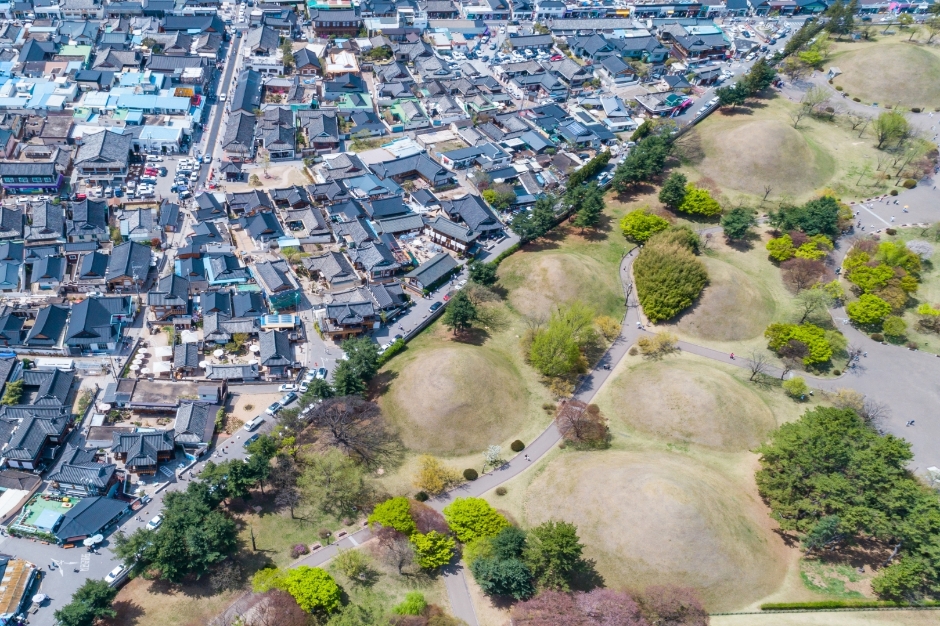
Daereungwon is a park of large Silla burial mounds in the middle of the city. UNESCO’s description of the Tumuli Park Belt notes that excavations of such tombs revealed gold, glass and ceramic grave goods. Cheonmachong (천마총), excavated in 1973, is the tomb with an interior open to visitors, according to the KTO record.
- Getting there: Check the official page for transport details.
- Hours, closed days, admission: The city fee page says entry to Daereungwon is free and Cheonmachong costs ₩3,000 (checked 2 Nov 2026). A KTO article from March 2025 lists the main gate as open 09:00-22:00 with last admission 21:30, but also lists ₩3,000 for the complex, which conflicts with the city page; KTO itself says to check for updates. Check the official page for hours and admission.
- Official page · Map
Cheomseongdae Observatory (첨성대 Cheomseongdae)
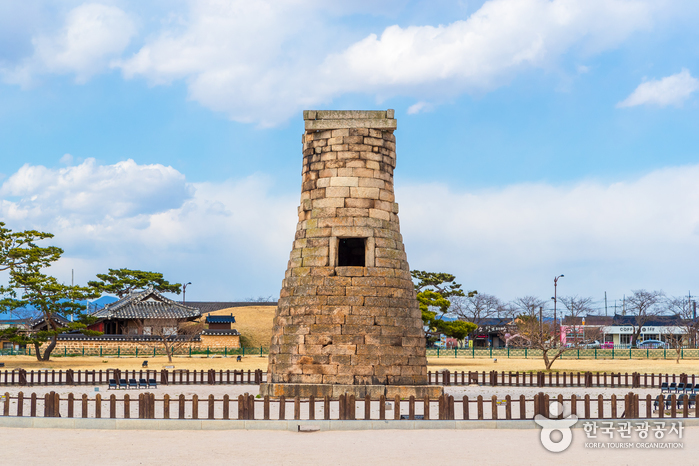
Cheomseongdae is a cylindrical stone tower about 9 metres high, built during the reign of Queen Seondeok (632-647). UNESCO lists it within the Wolseong Belt. The KTO record calls it a landmark of the city and one of the oldest astronomical observatories in the world, and notes that seasonal flowers bloom around it.
- Getting there: The city fee page says visitors use the Daereungwon car park.
- Hours, closed days, admission: The city fee page lists admission as free (checked 2 Nov 2026). Check the official page for hours.
- Official page · Map
Wolseong Palace Site (월성 Wolseong, also Banwolseong)
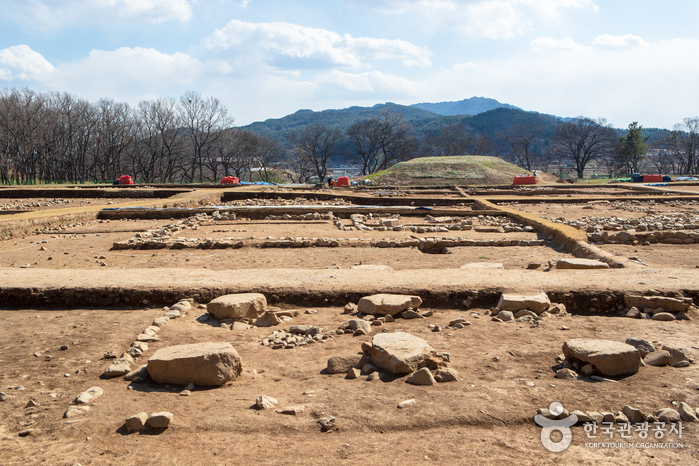
Wolseong was the palace fortress of the Silla dynasty, named for its crescent shape on a low hill. The KTO record says the area is now largely an open field, with remains such as the stone ice house (Seokbinggo). UNESCO lists the Wolseong palace site, the Gyerim woodland, Anapji Pond and Cheomseongdae together as the Wolseong Belt.
- Getting there: Check the official page for transport details.
- Hours, closed days, admission: Check the official page for hours and admission.
- Official page · Map
Donggung Palace and Wolji Pond (동궁과 월지 Donggung-gwa Wolji)
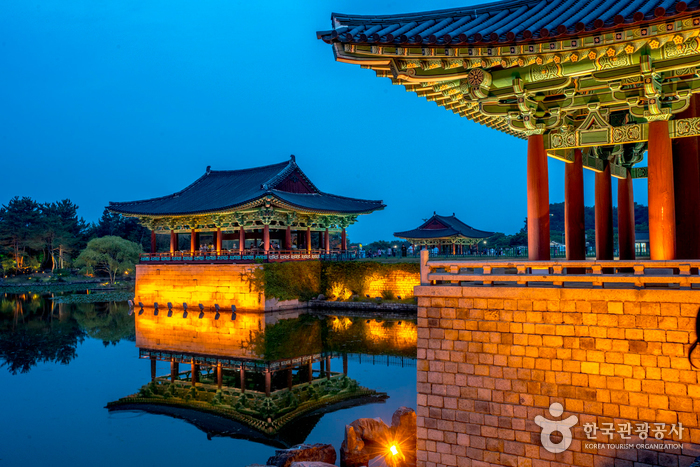
This was a secondary palace site of Silla, where the crown prince lived and where banquets were held. The KTO record says King Munmu had the large pond dug in 674, with three islands and a twelve-peaked hill. UNESCO lists the site under its earlier name, Anapji Pond, within the Wolseong Belt.
- Getting there: Check the official page for transport details.
- Hours, closed days, admission: The city fee page lists adult admission at ₩3,000 (checked 2 Nov 2026). It also warns that the site is busy for the night view and that arriving close to closing time may mean you cannot get in. Check the official page for hours.
- Official page · Map
Gyeongju National Museum (국립경주박물관 Gukrip Gyeongju Bangmulgwan)
The museum shows artefacts from the Silla dynasty, including metalwork and Buddhist sculpture. KTO’s article describes a large outdoor display area, including the Sacred Bell of Great King Seongdeok, and suggests the Silla History and Silla Art halls if you are short of time.
- Getting there: Check the official page for transport details.
- Hours, closed days, admission: Per a KTO article from March 2025: 10:00-18:00 with last admission 17:30, one hour later on Saturdays and public holidays, and closed on 1 January, Seollal and Chuseok. The city fee page lists the museum as free except paid special exhibitions. Hours can change, so check the official page.
- Official page · Map
Bunhwangsa Temple (분황사) and the Hwangnyongsa site (황룡사지)
Bunhwangsa was founded in 634 and has a stone-brick pagoda designated a national treasure, per the KTO record. Next to it are the ruins of Hwangnyongsa. UNESCO says Hwangnyongsa was the largest temple ever built in Korea, with an 80 m nine-storey pagoda added in 645, and lists both sites as the Hwangnyongsa Belt. The Hwangnyongsa Temple History and Culture Hall nearby has exhibitions and 3D videos, according to KTO.
- Getting there: Check the official page for transport details.
- Hours, closed days, admission: The city fee page lists Bunhwangsa as free and the History and Culture Hall at ₩3,000 for adults. KTO (March 2025) lists the hall as open 09:00-18:00 (to 19:00 on weekends from April to October) and closed on 1 January, Seollal and Chuseok. Check the official page for the current hours.
- Official page · Map
Namsan Mountain (남산 Namsan)
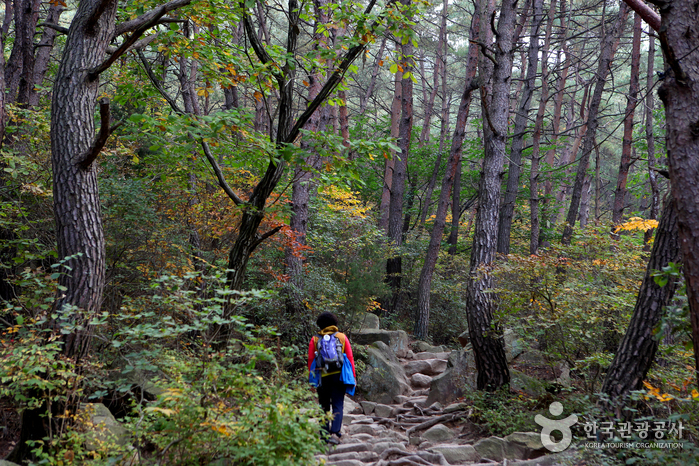
Gyeongju’s Namsan is a 466 m mountain south of the city centre that the Silla people treated as sacred. UNESCO describes the Namsan Belt as covering 2,650 hectares, with ruins of 122 temples, 53 stone statues, 64 pagodas and 16 stone lanterns recorded at the time of inscription. Visitors hike it and see the heritage sites along the trails.
- Getting there: Check the official page for transport details.
- Hours, closed days, admission: Check the official page for hours and admission.
- Official page · Map
Yangdong Village (양동마을 Yangdong Maeul)

Yangdong is a clan village from the Joseon period. UNESCO inscribed it in 2010 with Hahoe as Historic Villages of Korea, and calls the two the most representative historic clan villages in the country. The KTO record says about 160 old houses sit in the valley, and 54 of them are over 200 years old.
- Getting there: Check the official page for transport details.
- Hours, closed days, admission: The city fee page lists adult admission at ₩4,000 (checked 2 Nov 2026). Check the official page for hours.
- Official page · Map
Practical notes
- Short days now. Bulguksa and Seokguram stop admitting visitors at 17:00 from November to January, so plan the temples for the daytime.
- Holiday closures. The museum and the Hwangnyongsa hall are closed on 1 January, Seollal and Chuseok per KTO. See Korean public holidays 2026-2027 for the dates.
- Bad weather. The Seokguram page says warnings for heavy rain, typhoon or heavy snow can close the grounds.
- Night visits. Donggung and Wolji is busy in the evening, so do not leave arrival to the last minute.
- What to pack. See Korea weather by season.
- Tourist information. The city lists tourist information desks, including one at the KTX Gyeongju Station, on its tourism site.
Related guides
- Busan Travel Guide: Major Sights and Access
- Jeonju Travel Guide: Major Sights and Access
- KTX Booking with a Foreign Card
Sources
- UNESCO World Heritage Centre — Gyeongju Historic Areas, checked 2 Nov 2026
- UNESCO World Heritage Centre — Seokguram Grotto and Bulguksa Temple, checked 2 Nov 2026
- UNESCO World Heritage Centre — Historic Villages of Korea: Hahoe and Yangdong, checked 2 Nov 2026
- Gyeongju City — Admission fees (입장료안내), checked 2 Nov 2026
- Gyeongju City — Directions (English), checked 2 Nov 2026
- Bulguksa — Visiting hours and fees, checked 2 Nov 2026
- Seokguram — Visiting hours and fees, checked 2 Nov 2026
- Korea Tourism Organization — Pedaling Through Time: A Bike Tour Guide to Gyeongju, checked 2 Nov 2026
- Korea Tourism Organization place records for each site (via the site’s KTO data), checked 2 Nov 2026