Busan is a port city where Visit Busan and the Korea Tourism Organization feature beaches, hillside villages, fish markets, coastal temples and a rocky geopark shoreline. This guide covers 12 places in route order, how to reach the city and how to get around by metro and bus.
Selection: places featured on Visit Busan attraction pages and in Korea Tourism Organization (KTO) records, plus coastal sites with a National Geopark designation. The order runs from the west of the city to the east, then north. It is not a ranking.
Getting there and around
From Seoul by train. Per the KTO train page, KTX connects Seoul, Yongsan and Cheongnyangni stations with cities including Busan, and the SRT runs from Suseo Station toward Busan or Mokpo. The Gyeongbu Line linking Seoul and Busan is 447.1 km long. Korail’s English booking site is korail.com/global/eng. The pages checked do not give a Seoul to Busan journey time or a Busan arrival station, so read both from the Korail timetable when you book. Our guide to KTX booking with a foreign card covers payment, and Intercity Express Buses covers the bus option.
By air. Visit Busan says Gimhae International Airport handles all international and domestic flights for Busan and is about an hour from downtown. For the subway route it advises taking the Busan-Gimhae Light Rail from the airport and changing at Sasang (Metro Line 2) or Daejeo (Metro Line 3). An Airport Limousine bus runs to Haeundae New Town in about an hour, stopping at Namcheon-dong, Gwangan-dong and Suyeong Junction. Visit Busan describes three taxi types: regular, deluxe and large, with deluxe and large costing 50% more than regular.
Metro and bus. Per Visit Busan, the Busan Metro (Lines 1 to 4, the light rail and the Donghae Line) runs from 05:00 to 23:59, and first and last trains differ by station. Fares are by distance for QR tickets, the Busan Subway mobile pass and transit cards. A 1-day, 3-day or 30-day commuter pass has a fixed price and is not valid on the Donghae Line or the light rail. Hanaro is Busan’s official transit card, and T-money, Mybi and Cashbee also earn transfer discounts. See T-money with a foreign card. Transfers within 30 minutes are discounted up to twice per trip, but not on the Airport Limousine. Buses do not take bags over 20 kg or larger than 50 x 40 x 20 cm, and there is an extra charge after 23:40. For taxis see Taxis without a Korean number, and for navigation see Naver Map for visitors.
Help on the ground. Visit Busan lists tourist information centres at Busan Station, Nampo-dong, Gwangalli, Cheongsapo and the Taejongdae entrance, and a travel hotline on 1330.
For maps, translation and transport apps that work in Korea, see our apps for Korea guide.
Major sights
Gamcheon Culture Village (감천문화마을 Gamcheon Munhwa Maeul)
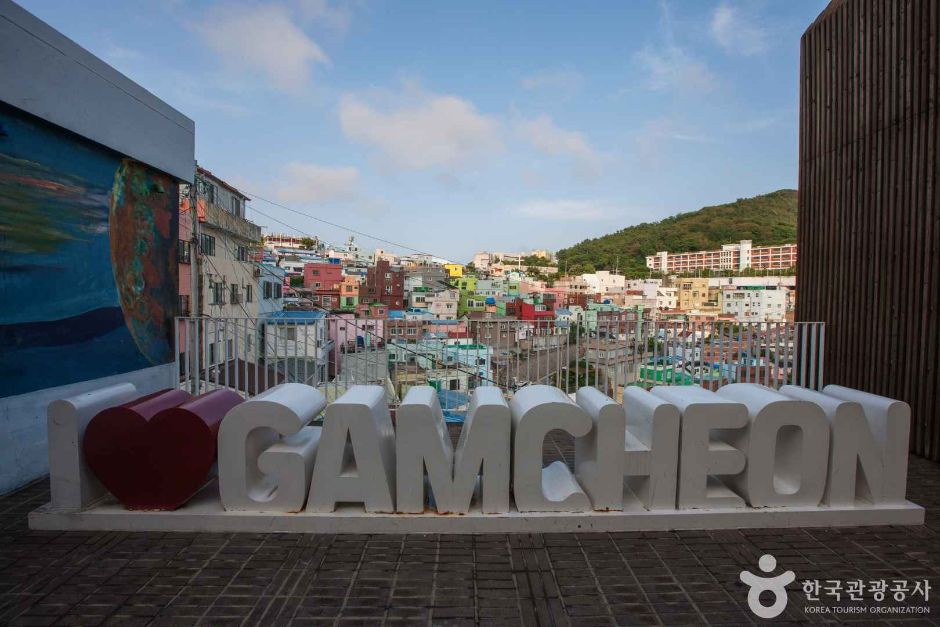
Refugees from the Korean War built stepped houses on this coastal hillside. In 2009 students, artists and residents decorated it as a village art project. Visit Busan says it has since become a leading attraction and notes a nickname, the Machu Picchu of Korea. Visitors follow murals and sculptures through the alleys, and a stamp map is sold at the village information centre.
- Getting there: Per Visit Busan, take Exit 6 of Goejeong Station (Line 1), then village bus Saha 1 or Saha 1-1 to Gamjeong Elementary School and walk 5 minutes.
- Hours, closed days, admission: Per Visit Busan, checked 2 Nov 2026: open all year, 09:00-18:00 from March to October and 09:00-17:00 from November to February; free except parking. It is a residential area, so keep quiet; drones are not allowed.
- Official page · Map
Jagalchi Market (자갈치시장 Jagalchi Sijang)
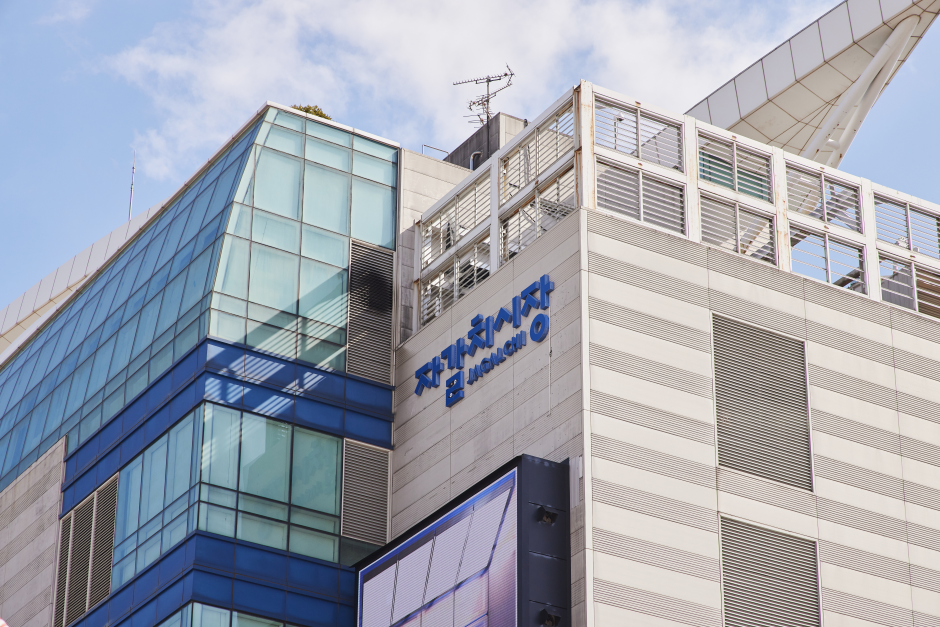
The KTO record describes Jagalchi as one of Korea’s largest seafood markets, selling live and dried fish, and a place that took on its fish-market role after the Korean War. Visit Busan’s downtown route says you can pick live fish from tanks on the first floor, have it prepared in a second-floor restaurant, and reach an open observation deck from the seventh floor.
- Getting there: Station directions are not given on the pages checked. Visit Busan’s downtown walking route links Jagalchi with Yongdusan Park, below.
- Hours, closed days, admission: Per Visit Busan’s downtown guide, checked 2 Nov 2026: 5 AM-10 PM, closed on the first and third Tuesdays of each month. Individual shops vary. Admission is not stated.
- Official page · Map
Yongdusan Park and Busan Tower (용두산공원 Yongdusan Gongwon)
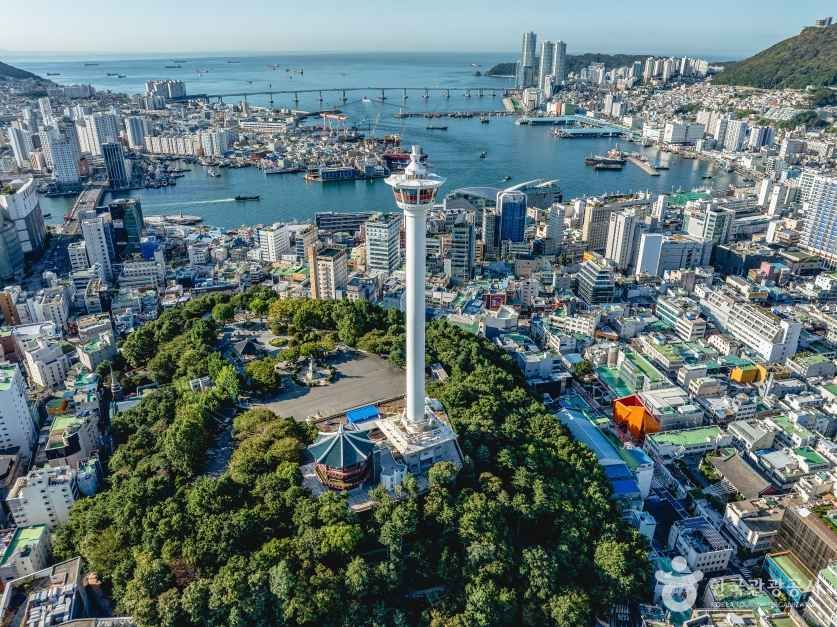
This park sits in central Busan above Nampo-dong. The KTO record lists an escalator link from Nampo-dong, a flower clock, a bell pavilion, a statue of Admiral Yi Sun-sin and Busan Tower, whose observatory looks over the port and city. Visit Busan also mentions a projection-mapping show at the tower.
- Getting there: Per Visit Busan, 6 minutes on foot from Exit 1 of Jungang Station or 7 minutes from Exit 7 of Nampo Station (both Line 1).
- Hours, closed days, admission: Per Visit Busan, checked 2 Nov 2026: park open all year and free; Busan Tower 10:00-22:00 (last admission 21:30), subject to weather, with a separate tower fee on the official website.
- Official page · Map
Huinnyeoul Culture Village (흰여울문화마을 Huinnyeoul Munhwa Maeul)
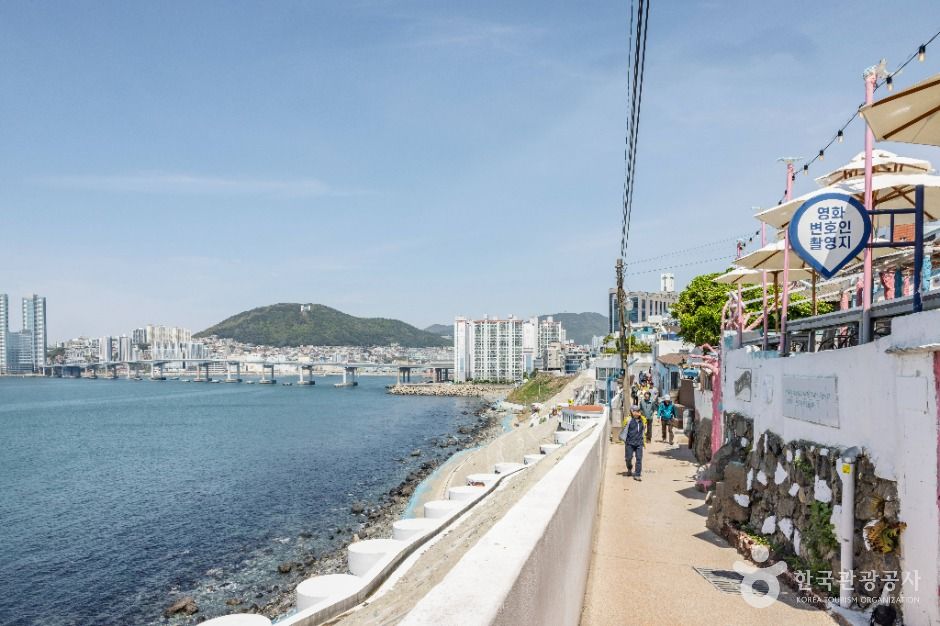
On Yeongdo island, old houses along a cliff beside the sea were remodelled in December 2011 into an arts village, per the KTO record. Visit Busan highlights the sea view from the Huinnyeoul Observatory and the Jeoryeong Coastal Trail nearby. Respect the residents who live here.
- Getting there: Per Visit Busan, Exit 6 of Nampo Station (Line 1), then bus 7, 71 or 508 to Baengnyeonsa Temple in Yeongseon-dong.
- Hours, closed days, admission: Per Visit Busan, checked 2 Nov 2026: open every day, free.
- Official page · Map
Taejongdae Park (태종대 Taejongdae)
Taejongdae is the southern tip of Yeongdo. The KTO record lists it as a National Geopark, with a cliffed coast, sea caves and forest paths. Visit Busan describes the Danubi tourist train that circles the park road, an observatory, and Yeongdo Lighthouse, which it says has been lit since 1906.
- Getting there: Per Visit Busan, from Busan Station Exit 7 (Line 1) take bus 17, 88 or 101 to the Taejongdae stop. A tourist information centre is at the park entrance.
- Hours, closed days, admission: Per Visit Busan, checked 2 Nov 2026: open daily and free; the Danubi Train costs extra and does not run on Mondays. Its stated hours are 09:20-20:00 from June to August and 09:20-18:00 from October to April. May and September are not stated.
- Official page · Map
UN Memorial Cemetery in Korea (재한 유엔기념공원 Jaehan Yuen Ginyeom Gongwon)
Visit Busan describes the cemetery as holding 2,300 graves from 11 countries, created by the United Nations Command during the Korean War. It also has a memorial with carved doves, a Wall of Remembrance with names of UN casualties, and a sculpture park. The same listing covers the nearby UN Peace Memorial Hall.
- Getting there: Per Visit Busan, an 18-minute walk from Exit 3 of Daeyeon Station (Line 2), or bus 134, 68, 138, 138-1 or 1006 to the UNMCK-Busan Cultural Center stop.
- Hours, closed days, admission: Per Visit Busan, checked 2 Nov 2026: cemetery open all year, daily 09:00-18:00 (May-September) and 09:00-17:00 (October-April); free. The Peace Memorial Hall is closed Mondays, 1 January, Lunar New Year’s Day and Chuseok, with a partial tour only from 17 October to 31 December.
- Official page
Oryukdo Islets and Skywalk (오륙도 Oryukdo)
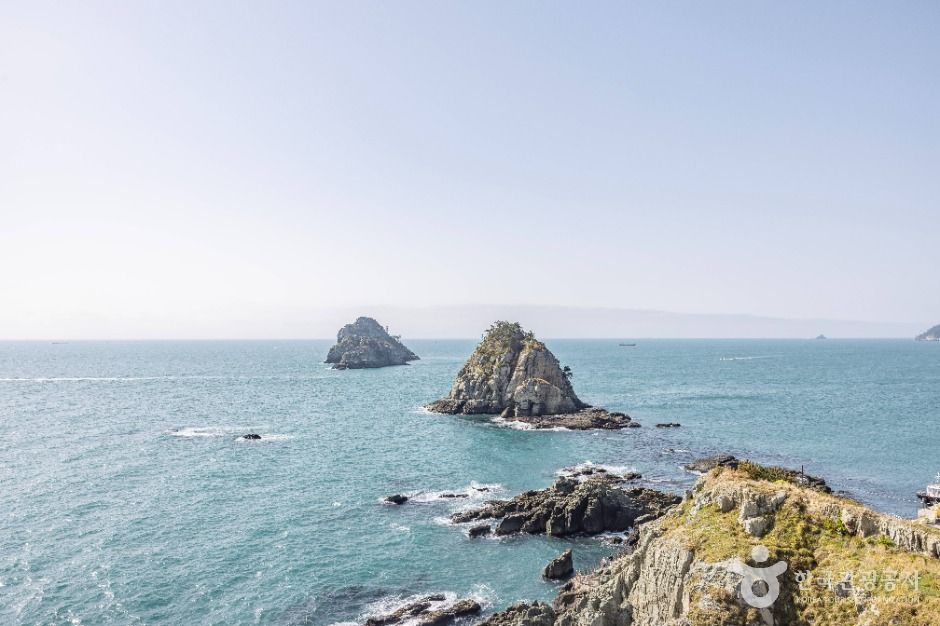
Oryukdo is a group of rocky islets off Nam-gu that appear as five at low tide and six at high tide. Visit Busan says it is a Busan National Geopark and a marine sanctuary, and that only Deungdaeseom island, with its lighthouse, can be visited. The Oryukdo Skywalk and Sunrise Park give views of the islets.
- Getting there: Per Visit Busan, from Kyungsung Univ.-Pukyong Nat’l Univ. Station (Line 2) take bus 24, 27, 131 or Nam-gu 2 to Oryukdo SK View Apartment.
- Hours, closed days, admission: Per Visit Busan, checked 2 Nov 2026: the site is free and open at all times. The skywalk runs 09:00-18:00 (entry closes 17:50), or 09:00-19:00 from June to September, and may be restricted in snow, rain or strong wind.
- Official page · Map
Gwangalli Beach (광안리해수욕장 Gwangalli Haesuyokjang)
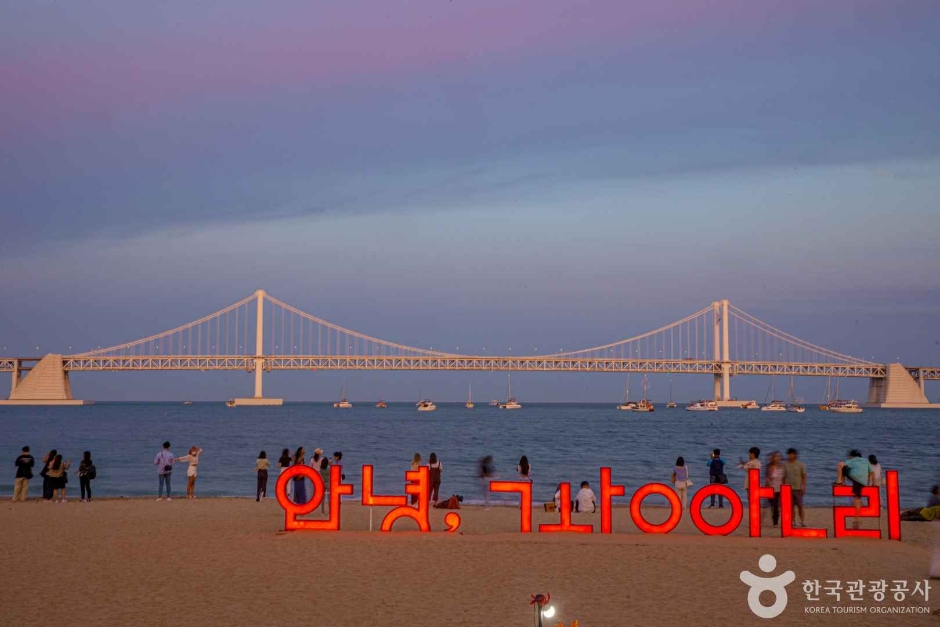
The KTO record gives the beach as 1.4 km long, with cafes and restaurants behind it. Visit Busan says many visitors come in the evening for the lights of Gwangandaegyo Bridge, and lists water sports such as paddleboarding and surfing.
- Getting there: Per Visit Busan, a 13-minute walk from Exit 5 of Gwangan Station (Line 2), or bus 42 or 62.
- Hours, closed days, admission: Per Visit Busan, checked 2 Nov 2026: open at all times, free. Visit Busan’s Plan your trip page lists a Gwangalli drone light show for 14-28 November 2026; check the programme there.
- Official page · Map
Haeundae Beach (해운대해수욕장 Haeundae Haesuyokjang)
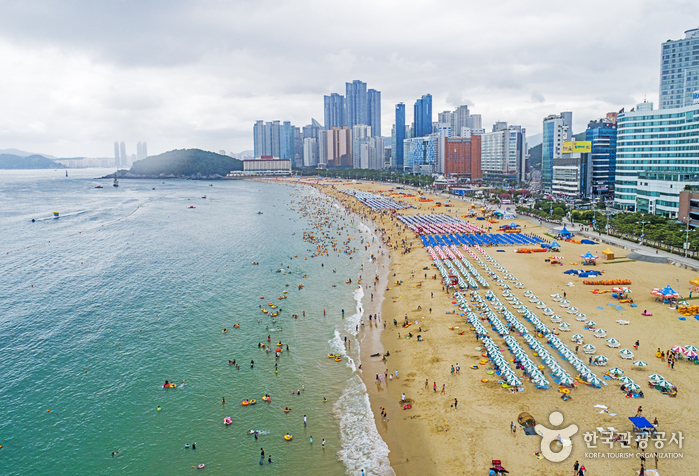
Visit Busan calls Haeundae the best-known of Busan’s beaches. It is a 1.5 km stretch of white sand. Walking to the end of the beach brings you to Dongbaekseom island and its coastal trail. Visit Busan also lists a sand festival held from May to June and a sea festival in July.
- Getting there: Per Visit Busan, a 15-minute walk from Exit 5 of Haeundae Station (Line 2), or buses 139, 307 and 1003.
- Hours, closed days, admission: Per Visit Busan, checked 2 Nov 2026: listed as every day 09:00-18:00, free.
- Official page · Map
Haeundae Blueline Park (해운대 블루라인파크 Haeundae Bulluraein Pakeu)
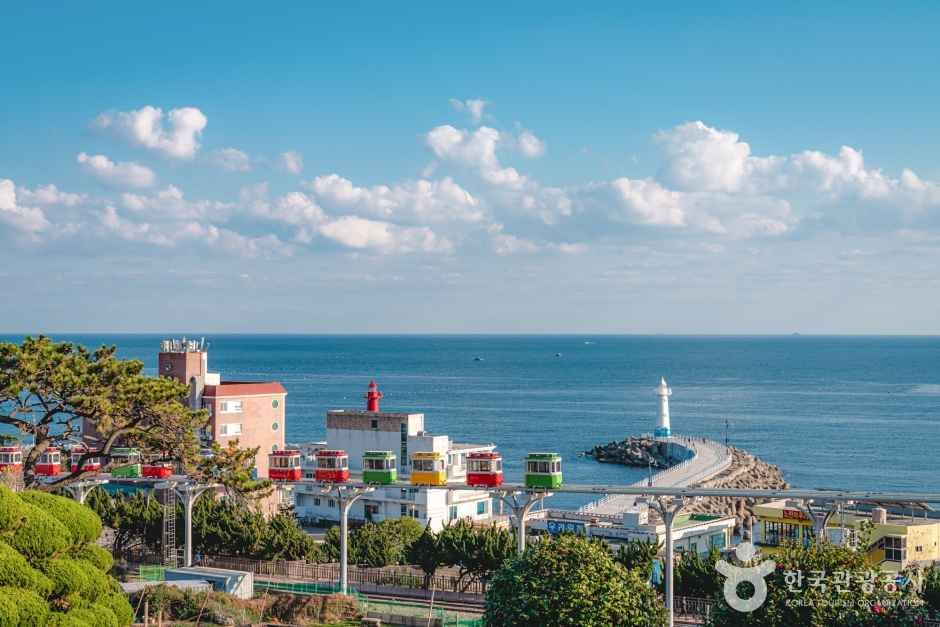
This park reuses a 4.8 km stretch of the old Donghae Nambu railway between Mipo, Cheongsapo and Songjeong. Visit Busan says it runs the Haeundae Beach Train, a sightseeing train between those stops, and the Sky Capsule, a four-seat capsule that travels 2 km at 7 to 10 metres above sea level from Mipo to Cheongsapo.
- Getting there: Visit Busan lists Mipo Station (13 Dalmaji-gil 62beon-gil) and Songjeong Station (299-20 Songjeong-dong).
- Hours, closed days, admission: Check the official page for hours and admission.
- Official page · Map
Haedong Yonggungsa Temple (해동 용궁사 Haedong Yonggungsa)
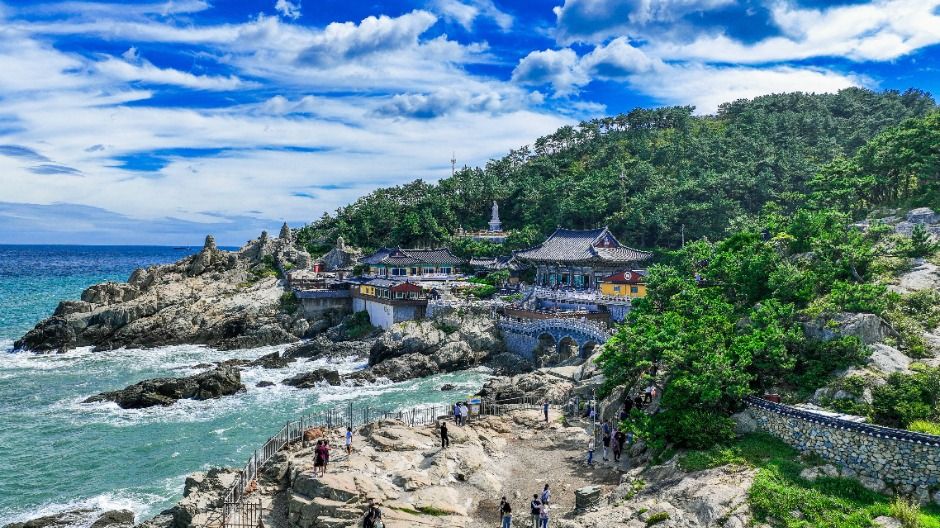
This temple stands on the coast of Gijang, unusual in Korea where most temples are in the mountains. The KTO record dates its founding to 1376. Visit Busan describes the 108 steps, the zodiac statues at the approach and the coastal trail. The temple’s own site calls it one of three sacred places in Korea tied to the Goddess Buddha of mercy.
- Getting there: Check the official page; no transport directions are stated on the pages checked.
- Hours, closed days, admission: Check the official page for hours and admission. Visit Busan notes pets may enter in a carrier or with a muzzle.
- Official page · Map
Beomeosa Temple (범어사 Beomeosa)
Beomeosa sits on Geumjeongsan mountain. The KTO record dates it to 678 in the Silla period, and Visit Busan tags it with a stone pagoda, Daeungjeon Hall and walking trails. Templestay applications are made on the temple website. It is a working monastery, so keep quiet.
- Getting there: Per Visit Busan, Exit 5 or 7 of Beomeosa Station (Line 1), then bus 90 to Beomeosa Parking Lot.
- Hours, closed days, admission: Per Visit Busan, checked 2 Nov 2026: open all year, daily 08:00-17:00, free.
- Official page · Map
Practical notes
- Several sights have stated closures: Jagalchi (first and third Tuesdays), the Danubi Train at Taejongdae (Mondays) and the UN Peace Memorial Hall (Mondays and some holidays). Check national holiday dates in Korean public holidays 2026-2027.
- Oryukdo Skywalk can be restricted in snow, rain or strong wind, and Busan Tower operation depends on weather, per Visit Busan. For clothing and seasons see Korea weather by season.
- Gamcheon and Huinnyeoul are residential. Visit Busan asks visitors to keep quiet and not to use drones at Gamcheon.
- Opening hours and events change. Visit Busan has a Shows and Events section, and its hotline is 1330.
Related guides
- Gyeongju Travel Guide: Major Sights and Access
- Seoul Travel Guide: Major Sights and Access
- Jeju Travel Guide: Major Sights and Access
Sources
- Visit Busan — Gamcheon Culture Village, checked 2 Nov 2026
- Visit Busan — A Guide to Busan’s Historic Downtown: Nampo-dong and Jagalchi, checked 2 Nov 2026
- Visit Busan — Yongdusan Park, checked 2 Nov 2026
- Visit Busan — Huinnyeoul Culture Village, checked 2 Nov 2026
- Visit Busan — Taejongdae Park, checked 2 Nov 2026
- Visit Busan — UN Memorial Cemetery in Korea, checked 2 Nov 2026
- Visit Busan — Oryukdo Islets, checked 2 Nov 2026
- Visit Busan — Gwangalli Beach, checked 2 Nov 2026
- Visit Busan — Haeundae Beach, checked 2 Nov 2026
- Visit Busan — Haeundae Blueline Park, checked 2 Nov 2026
- Visit Busan — Haedong Yonggungsa Temple, checked 2 Nov 2026
- Visit Busan — Beomeosa Temple, checked 2 Nov 2026
- Visit Busan — Preparing for a Trip: Transportation, checked 2 Nov 2026
- Visit Busan — Tourist Information Center, checked 2 Nov 2026
- Haedong Yonggungsa Temple — official English site, checked 2 Nov 2026
- Korea Tourism Organization — Train, checked 2 Nov 2026
- Korail — Official website for foreigners, checked 2 Nov 2026
- Korea Tourism Organization — place records (TourAPI), checked 2 Nov 2026