Suwon is known for Hwaseong Fortress, a UNESCO World Heritage site, and nearby Gyeonggi-do has a second UNESCO fortress, a folk-village museum, a theme park and the DMZ border area. This guide covers eight places, how to reach them from Seoul, and the hours and fees their official pages state.
The places below are ones with a UNESCO World Heritage listing or ones featured in Korea Tourism Organization records and city or province tourism pages. They are ordered by area, not ranked.
Getting there and around
All eight places are in Gyeonggi-do, the province around Seoul. Suwon is on Subway Line 1, so you can reach it without booking anything. For the other areas you usually take a train or subway to a named station and then a local bus, as in the table. Each row comes from the official page for that place.
| Place | Rail stop named by the official page | Then |
|---|---|---|
| Hwaseong Fortress, Haenggung | Suwon Station (Line 1) | Bus 11, 13 or 13-4 from Exit 4 |
| Korean Folk Village | Sanggal Station (Suin-Bundang Line) | Bus 37 or 10-5 from Exit 3 |
| Namhansanseong | Sanseong Station (Line 8) | Bus 52 or 9 to the last stop |
| Gwangmyeong Cave | KTX Gwangmyeong Station, Exit 8 | Bus 77 to the last stop |
| Imjingak Peace Gondola | Imjingang Station (Gyeongui-Jungang Line) | 8-minute walk |
| Everland | Check the transport page on Everland’s official site | |
The Suwon bus numbers come from the Suwon Cultural Foundation’s English directions page, which shows no date. The city’s own tourist guide from September 2024 lists more bus routes from Suwon Station, so confirm the number at the stop.
From Incheon Airport, the same foundation page describes two routes to Suwon: a limousine bus from stop 7A, or the Airport Railroad to Seoul Station and then Line 1 to Suwon Station. See Incheon Airport to Seoul for the airport side, T-money with a foreign card for subway and bus fares, and intercity express buses if you prefer a coach. A Korail ticket for the KTX stop at Gwangmyeong is covered in KTX booking with a foreign card. For navigation, see Naver Map for visitors and apps for Korea.
Major sights
Suwon Hwaseong Fortress (수원 화성)
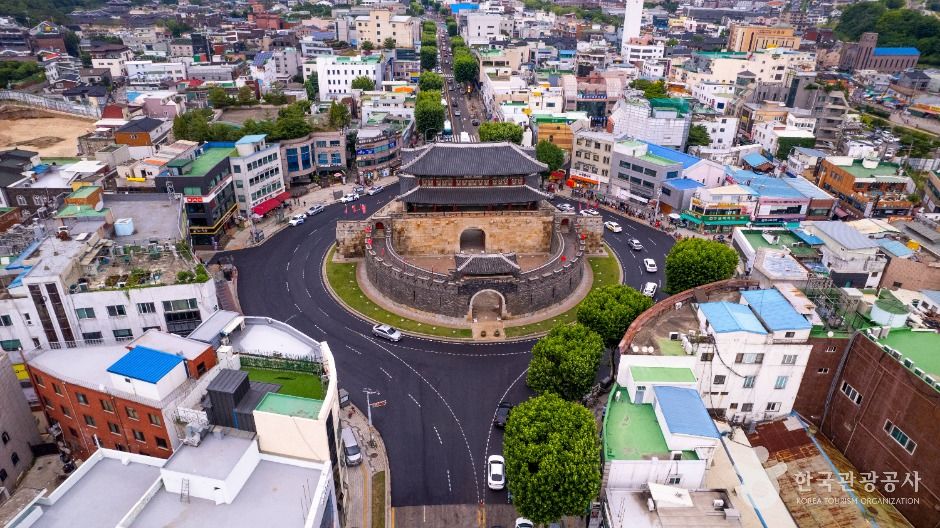
Hwaseong is the fortress wall around the centre of Suwon. UNESCO describes stone-and-brick walls of about 5.74 km, four main gates, and defences such as bastions, watchtowers and floodgates. The Korea Tourism Organization record says King Jeongjo built it between 1794 and 1796, and that it was listed as a World Heritage site on 12 December 1997. Two of the gates, Janganmun and Changnyongmun, were destroyed in the Korean War and have been restored since 1964.
- Getting there: Suwon Station on Line 1, then a city bus (see the table above).
- Hours, closed days, admission: Per the Suwon Cultural Foundation’s Korean page, checked 2 Nov 2026, the walls are open-access, free, and open to visit at night. An older English page from the same site lists 09:00 to 18:00 viewing hours, so the two pages disagree. Check the official page before you plan a night walk.
- Official page · Map
Hwaseong Haenggung Palace (화성행궁)
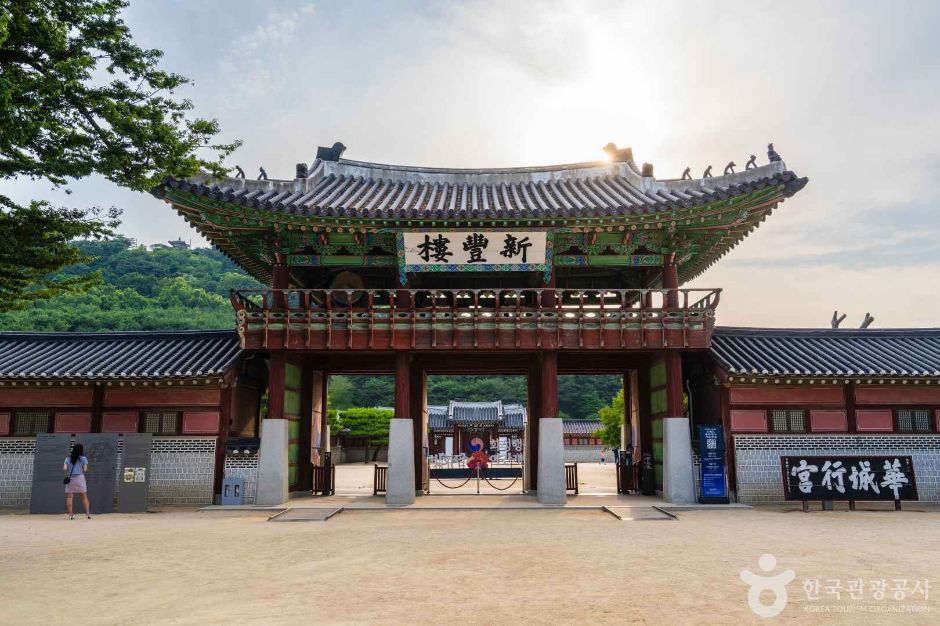
A haenggung (행궁) is a temporary palace for the king. The KTO record calls this the largest of them, used by the Joseon kings from the time of King Jeongjo, who stayed here on trips to worship at his father’s tomb. Today it hosts traditional cultural performances and activities.
- Getting there: Suwon Station, then bus 11, 13 or 13-4 to the Hwaseong Haenggung stop, per the Suwon Cultural Foundation.
- Hours, closed days, admission: Per the Suwon Cultural Foundation’s Korean page, checked 2 Nov 2026: 09:00 to 18:00, open every day of the year, adult ₩2,000, teen or military ₩1,500, child ₩1,000. A combined ticket for three sites is ₩4,000 for an adult. The last Wednesday of each month is free (Culture Day). The foundation’s English page gives the last admission as 17:30, while the Korean page says one hour before closing, so allow extra time. The Suwon city guide from September 2024 listed 17:00 closing from November to February, so check winter hours. The 2026 night opening was listed as running to 1 Nov.
- Official page · Map
Korean Folk Village (한국민속촌 Hanguk Minsokchon)

The KTO record describes a recreated late-Joseon village with restored houses, cultural classes, seasonal customs, and performances such as folk music and martial arts on horseback. It also has a small theme park with 15 attractions and a market street with Korean food. The village’s home page lists autumn evening programmes to 15 Nov 2026, some of them horror-themed.
- Getting there: The village names Sanggal Station on the Suin-Bundang Line as the nearest station, then bus 37 or 10-5 from Exit 3. From Suwon Station Exit 4, it lists the same two buses. It also lists airport bus A8877 from Incheon Airport.
- Hours, closed days, admission: Per the village’s site, checked 2 Nov 2026: 10:00 to 19:00 on weekdays in November, with Friday to Sunday night opening until 22:00 (1 to 15 Nov) and 20:00 (16 to 30 Nov). A full-day adult ticket is ₩37,000 on weekdays and ₩39,000 at weekends. A listed foreign-visitor rate of ₩22,000 applies with a passport or alien registration card, stated as valid through 2026.
- Official page · Map
Everland (에버랜드)

Everland is an amusement park in Yongin. The KTO record lists five themed areas, including Zootopia, and seasonal festivals through the year. It names T-Express as Korea’s first wooden roller coaster.
- Getting there: Check the official page for the current transport guide.
- Hours, closed days, admission: Hours change by day. Everland’s home page showed 10:00 to 21:00 for 2 Nov 2026 and a notice about scheduled ride safety checks in November and December. Check the official page for hours and admission (look for 일별 운영정보 daily hours and 이용 요금 ticket prices).
- Official page · Map
Namhansanseong (남한산성)
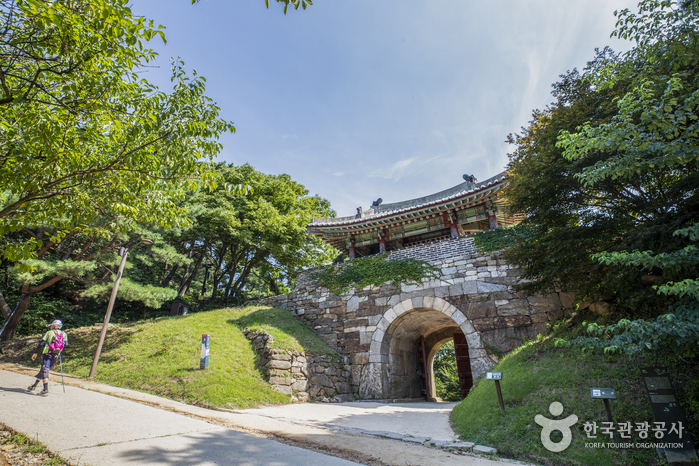
Namhansanseong is a mountain fortress about 25 km from Seoul, listed by UNESCO in 2014. UNESCO says it was designed as an emergency capital for the Joseon dynasty and was built and defended by Buddhist soldier-monks. Gyeonggi Province gives the wall length as about 11.76 km. King Injo took refuge here during the Qing invasion of 1636 and built a temporary palace, according to the KTO record.
- Getting there: Per the Namhansanseong World Heritage Center, take Line 8 to Sanseong Station, then bus 52 or 9 (9-1 on holidays) to the last stop. It lists Jamsil to Sanseong Station as 19 minutes by subway.
- Hours, closed days, admission: Per the World Heritage Center, checked 2 Nov 2026: entry to the fortress has been free since 1 Jan 2007. The temporary palace (행궁) is ₩2,000 for ages 19 to 64 and ₩1,000 for ages 7 to 18. Its hours are 10:00 to 18:00 from April to October and 10:00 to 17:00 from November to March, last tickets 30 minutes before closing. It is closed Mondays except public holidays.
- Official page · Map
Gwangmyeong Cave (광명동굴)
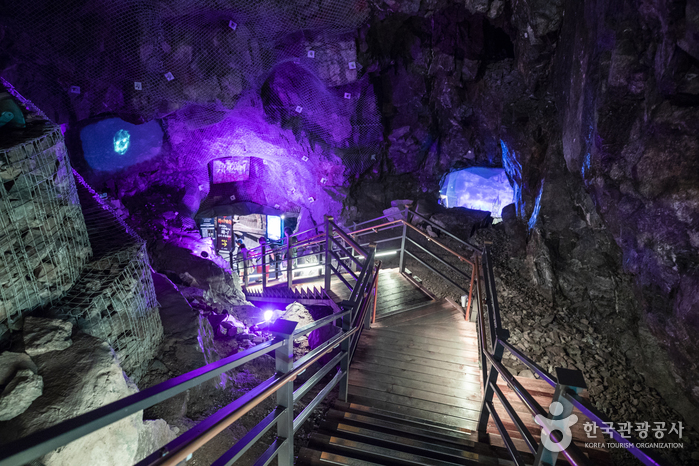
The KTO record says this former mine opened in 1912 and closed in 1972, and was later used as a salted-seafood store. Gwangmyeong City bought the site and opened it to the public. Visitors walk through lit cave passages with sculptures, and there is a media-art exhibition hall and a wine cave.
- Getting there: Per Gwangmyeong City, take KTX Gwangmyeong Station Exit 8 and bus 77 to the last stop. From Line 7, it lists Cheolsan Station Exit 2 and bus 17. It asks visitors to use public transport at weekends because parking can run short.
- Hours, closed days, admission: Per Gwangmyeong City, checked 2 Nov 2026: 09:00 to 18:00, last entry 17:00, closed every Monday. The page lists an adult cave ticket at ₩10,000 (fees applied from 1 Jan 2024). It says the cave stays at 12 degrees or below all year, so bring long sleeves, and a visit takes 30 to 90 minutes.
- Official page · Map
Paju Imjingak Peace Gondola (파주 임진각 평화곤돌라)
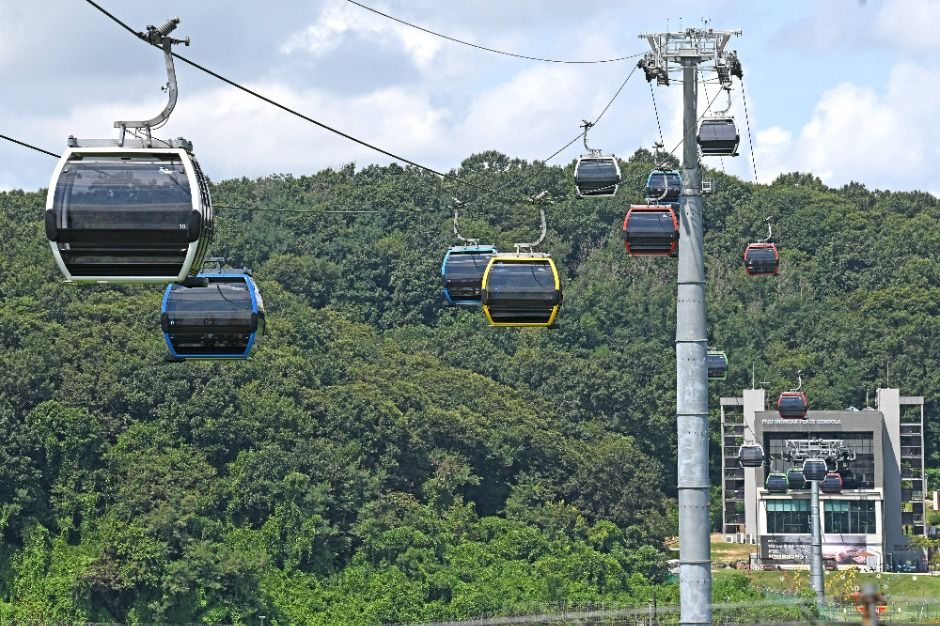
This gondola runs from the Imjingak tourist complex across the Civilian Control Zone to Camp Greaves. The KTO record says it is Korea’s first gondola to cross that zone, with views of fences, guard posts and other signs of the division. There is a regular cabin and a transparent “crystal” cabin.
- Getting there: Per the gondola’s site, Imjingang Station on the Gyeongui-Jungang Line is an 8-minute walk. Bus 93-9 runs at weekends and village bus 058 runs daily to the Imjingang stop, a 3-minute walk.
- Hours, closed days, admission: Per the gondola’s site, checked 2 Nov 2026: daily 09:00 to 18:00 all year; Camp Greaves 09:00 to 17:00, closed Mondays. An adult ticket is ₩12,000 (regular cabin) or ₩15,000 (crystal). The site says visitors without photo ID cannot enter the Civilian Control Zone, so bring your passport.
- Official page · Map
Dora Observatory (도라전망대)
Per the KTO record, this is the DMZ observatory closest to Panmunjeom, with views toward the North Korean side. Paju City’s tourism page says it lies inside the Civilian Control Zone, so ordinary private cars are restricted and a DMZ-linked tour is the practical way in. See DMZ tours: booking rules, ID and dress code for how booking works.
- Getting there: Through a DMZ tour from Imjingak, per the KTO record and Paju City.
- Hours, closed days, admission: Paju City’s page lists its coin telescopes as 10:00 to 17:00, closed Mondays, ₩500 for 2 minutes. That page shows no date, so check the official page for hours and admission.
- Official page · Map
Practical notes
- Mondays: Namhansanseong’s palace, Gwangmyeong Cave and Camp Greaves are closed on Monday according to their official pages. Hwaseong Haenggung is listed as open every day.
- Photo ID: The gondola site and Paju City both say you need ID for the Civilian Control Zone. Carry your passport, not a copy.
- Winter hours: Namhansanseong’s palace closes an hour earlier from November, and the Suwon city guide lists shorter winter hours for Hwaseong Haenggung. Seasonal programmes at the Folk Village and Everland change, so check both sites close to your date.
- Public holidays: See Korean public holidays 2026-2027. Some opening rules above change on holidays.
- Weather: The cave is cool all year, and the fortress walls are mostly outdoors. See Korea weather by season.
- Fees change: Prices above are as stated on each page on 2 Nov 2026. The Gwangmyeong fee table says it applies from 2024.
Related guides
- Seoul Travel Guide: Major Sights and Access
- Incheon Travel Guide: Major Sights and Access
- DMZ Tours: Booking Rules, ID and Dress Code
Sources
- UNESCO World Heritage Centre — Hwaseong Fortress, checked 2 Nov 2026
- UNESCO World Heritage Centre — Namhansanseong, checked 2 Nov 2026
- Suwon Cultural Foundation — Hours and fees (Korean), checked 2 Nov 2026
- Suwon Cultural Foundation — Directions (English), checked 2 Nov 2026
- Suwon City — Tourist guide, September 2024, checked 2 Nov 2026
- Gyeonggi Namhansanseong World Heritage Center — Visiting and parking, checked 2 Nov 2026
- Gyeonggi Namhansanseong World Heritage Center — Public transport, checked 2 Nov 2026
- Gyeonggi Province — Namhansanseong World Heritage news (2014), checked 2 Nov 2026
- Korean Folk Village — Operating information, fees and transport, checked 2 Nov 2026
- Everland — Home page, checked 2 Nov 2026
- Gwangmyeong City — Gwangmyeong Cave visitor information, checked 2 Nov 2026
- Gwangmyeong City — Gwangmyeong Cave directions, checked 2 Nov 2026
- Paju Imjingak Peace Gondola — Official site, checked 2 Nov 2026
- Paju City — Dora Observatory, checked 2 Nov 2026
- Korea Tourism Organization — place records for the sites above (TourAPI), checked 2 Nov 2026